
There is something special about a plate of freshly made homemade French fries. They are crispy on the outside, fluffy and tender inside, and taste so much better when they come straight from your own kitchen. Whether you are serving them with burgers, sandwiches, grilled chicken, or simply enjoying them with ketchup, homemade fries are an easy side dish that can turn an ordinary meal into something memorable.
The secret to really good French fries is not complicated. You need the right type of potato, a little patience, and a few simple techniques. Soaking the potatoes removes excess starch, drying them properly prevents soggy fries, and frying them twice gives them that classic crisp texture.
This Homemade French Fries Recipe is simple enough for beginners but includes all the little tricks that help you get restaurant-style fries at home.
Why You’ll Love This Homemade French Fries Recipe
There are plenty of reasons to make French fries from scratch instead of reaching for a frozen bag.
First, you have complete control over the ingredients. You can adjust the salt, choose your favorite cooking oil, and avoid unnecessary preservatives. Fresh potatoes also give the fries a wonderful homemade flavor.
Another advantage is texture. When prepared correctly, homemade fries develop a beautiful golden crust while staying soft and fluffy in the center.
This recipe is also versatile. You can keep the seasoning simple with salt, or add garlic powder, paprika, black pepper, Parmesan, herbs, or even a little chili seasoning for a spicy version.
Ingredients for Homemade French Fries
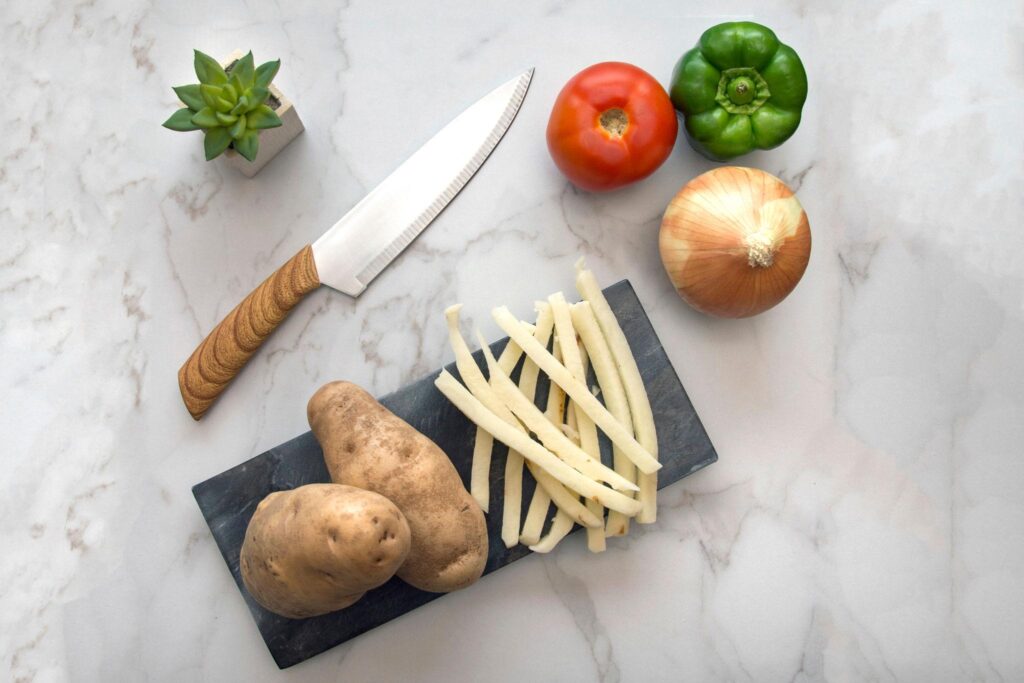
You only need a handful of ingredients to make delicious homemade fries.
Main Ingredients
- 4 large russet potatoes
- 6–8 cups vegetable, canola, or peanut oil for frying
- Cold water, for soaking
- 1–2 tablespoons salt for seasoning
- Additional salt, to taste
Optional Seasonings
For extra flavor, try:
- ½ teaspoon garlic powder
- ½ teaspoon paprika
- ¼ teaspoon black pepper
- A pinch of cayenne pepper
- 1 tablespoon grated Parmesan cheese
- Fresh chopped parsley
The potatoes are the star of this recipe, so choosing the right variety makes a noticeable difference.
What Are the Best Potatoes for French Fries?
Russet potatoes are generally one of the best choices for homemade French fries. They contain plenty of starch and relatively less moisture, which helps them become crisp on the outside and light and fluffy inside.
Yukon Gold potatoes can also work if that is what you have available. They tend to produce fries with a slightly creamier interior and a more buttery potato flavor.
Try to choose potatoes that are firm, fresh, and reasonably large. Larger potatoes make it easier to cut long, even fries.
How to Make Homemade French Fries
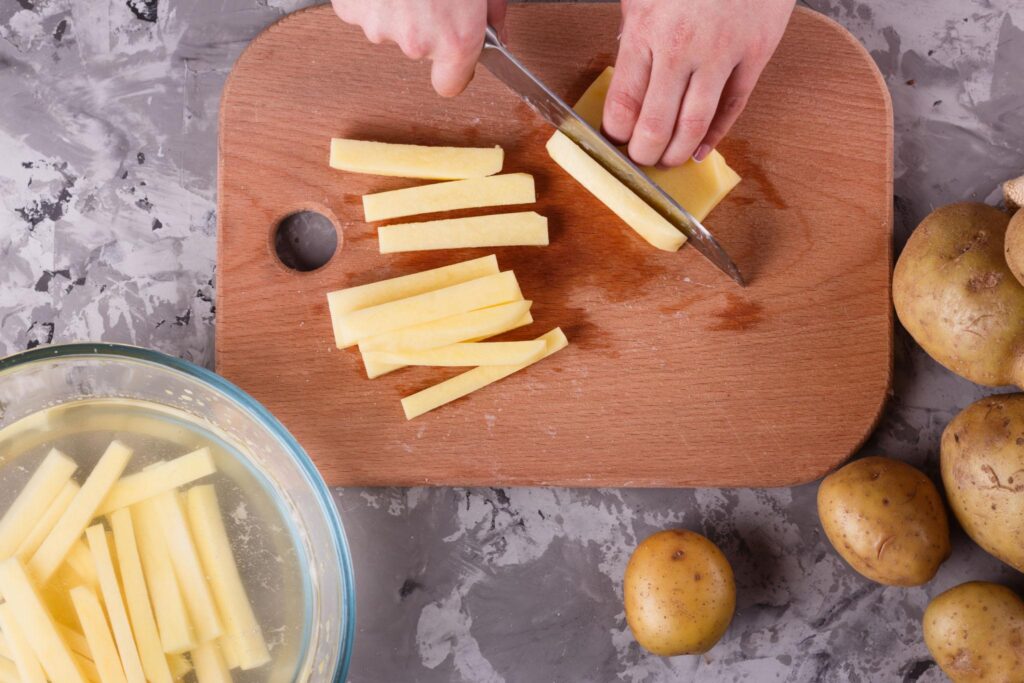
Step 1: Wash and Peel the Potatoes
Start by washing the potatoes thoroughly under cool running water. If you prefer rustic fries, you can leave the skins on. Otherwise, peel them using a vegetable peeler.
Leaving the skin on can add extra texture and a slightly earthy flavor, while peeled potatoes give you a more classic fast-food-style French fry.
Step 2: Cut the Potatoes
Cut each potato into slices approximately ¼-inch thick. Then cut those slices into sticks.
Try to keep the fries as similar in size as possible. This is more important than making every fry perfectly shaped. Fries with similar thickness will cook at roughly the same speed.
If some pieces are very thin and others are thick, the thin ones may become dark and crunchy before the thicker fries are fully cooked.
Step 3: Soak the Potatoes
Place the cut potatoes in a large bowl and cover them completely with cold water.
Let them soak for at least 30 minutes. If you have time, you can soak them for 1–2 hours in the refrigerator.
This step helps remove excess surface starch from the potatoes. Less surface starch means the fries are less likely to stick together and more likely to develop a crisp exterior.
After soaking, drain the potatoes thoroughly.
Step 4: Dry the Potatoes Very Well
This is one of the most important steps in the entire recipe.
Spread the potatoes over a clean kitchen towel or several layers of paper towels. Pat them thoroughly until they are as dry as possible.
Do not rush this step. Water and hot oil do not mix well, and wet potatoes can cause the oil to splatter. Properly drying the potatoes also helps them fry more evenly.
If necessary, allow them to air-dry for a few minutes after patting them.
The Secret to Extra Crispy French Fries: Double Frying
If you want fries that are crispy on the outside and fluffy inside, double frying is one of the best techniques.
The first fry gently cooks the potato and creates the soft interior. The second fry at a higher temperature develops the crisp, golden exterior.
It takes a little more time than a single fry, but the difference in texture is absolutely worth it.
Step 5: First Fry
Heat the oil in a heavy-bottomed pot or deep fryer to approximately 300°F (150°C).
Carefully add a small batch of potatoes to the oil. Do not overcrowd the pot because too many potatoes can lower the oil temperature and result in greasy fries.
Fry the potatoes for about 4–6 minutes, depending on their thickness. They should become tender but should not turn deeply golden at this stage.
Remove the potatoes using a slotted spoon or spider strainer and place them on a wire rack or paper towel-lined tray.
Repeat with the remaining potatoes.
Step 6: Let the Fries Rest
Allow the first-fried potatoes to rest for at least 10–15 minutes.
For even better results, you can let them cool completely. This resting period gives the potato interior time to firm up before the final fry.
If you are preparing fries for a gathering, the first frying can be done ahead of time. Then you can perform the final fry just before serving.
Step 7: Second Fry
Increase the oil temperature to approximately 375°F (190°C).
Add the potatoes in small batches again. Fry for about 2–4 minutes, or until the fries are crisp and beautifully golden.
Keep a close eye on them during this stage because they can go from golden to overly dark fairly quickly.
Remove the fries and place them on a wire rack or a paper towel-lined plate.
Step 8: Season Immediately
Season the fries while they are still hot.
A generous sprinkle of fine salt is all you really need. Hot fries hold seasoning much better than fries that have already cooled.
For something different, toss them with garlic powder and paprika. You can also add freshly grated Parmesan and chopped parsley for a restaurant-style variation.
How to Make French Fries Crispy
Getting crispy fries at home is mostly about controlling moisture and temperature.
Here are the most important tips:
1. Soak the potatoes.
Soaking helps remove excess starch from the surface.
2. Dry them completely.
Wet potatoes can cause splattering and interfere with crisping.
3. Don’t overcrowd the pot.
Adding too many potatoes at once can dramatically reduce the oil temperature.
4. Fry twice.
The first fry cooks the potato; the second fry creates the crispy exterior.
5. Season immediately.
Salt sticks better when the fries are freshly cooked.
6. Use a wire rack when possible.
A wire rack allows excess oil and steam to escape, helping the fries stay crisp.
Common Mistakes to Avoid
Even a simple French fries recipe can go wrong if a few details are overlooked.
Cutting the Fries Too Thick
Very thick fries can remain undercooked in the center while the outside becomes brown. Aim for reasonably even sticks.
Skipping the Soaking Step
While soaking is not absolutely mandatory, it can make a noticeable difference in texture, especially when you want very crispy fries.
Not Drying the Potatoes
This is one of the biggest mistakes. Make sure the potatoes are thoroughly dried before they go into the oil.
Frying Everything at Once
Overcrowding causes the oil temperature to drop. The potatoes may absorb more oil and become soft rather than crispy.
Using Oil That Is Too Cool
Low-temperature oil can produce greasy fries. Maintaining the correct temperature is important for achieving a crisp exterior.
Homemade French Fries Seasoning Ideas
Classic salted fries are delicious, but you can easily change the flavor.
Garlic Parmesan Fries
Toss hot fries with garlic powder, Parmesan cheese, and fresh parsley.
Spicy Fries
Add paprika, cayenne pepper, garlic powder, and a little black pepper.
Cajun-Style Fries
Use a Cajun seasoning blend with paprika, garlic, onion powder, black pepper, and a touch of cayenne.
Herb Fries
Add dried oregano, parsley, thyme, and a small amount of garlic powder.
Loaded French Fries
Top crispy fries with shredded cheese, cooked bacon, green onions, and your favorite sauce.
What to Serve With Homemade French Fries
Homemade French fries are incredibly versatile. They make a great side for almost any casual meal.
Serve them with:
- Classic cheeseburgers
- Grilled chicken sandwiches
- Crispy chicken tenders
- Homemade hot dogs
- Grilled steak
- Fried chicken
- Sloppy joes
- Chicken wraps
- Fish sandwiches
- BBQ chicken
For dipping, ketchup is a classic choice, but you can also serve fries with mayonnaise, ranch dressing, honey mustard, barbecue sauce, garlic aioli, or spicy mayo.
How to Store Leftover French Fries
French fries are best eaten immediately because they gradually lose their crispness as they cool.
If you have leftovers, allow them to cool and store them in an airtight container in the refrigerator. For the best texture, reheat them in an air fryer or oven rather than the microwave.
An air fryer can bring back much of the crisp texture. Spread the fries in a single layer and heat until they are hot and crisp.
Avoid sealing very hot fries in a container because trapped steam can make them soggy.
Can You Make French Fries Ahead of Time?
Yes. If you are cooking for a crowd, you can prepare the potatoes and complete the first frying ahead of time.
After the first fry, let the potatoes cool completely and refrigerate them. When you are ready to serve, heat the oil and perform the second fry.
This method is especially useful for parties, family dinners, or game-day gatherings because most of the preparation can be completed before your guests arrive.
Frequently Asked Questions
Why are my homemade French fries soggy?
Soggy fries are usually caused by excess moisture, overcrowding the frying pot, or oil that is not hot enough. Soaking, thoroughly drying, and double frying can help solve the problem.
Do I have to peel potatoes for French fries?
No. You can leave the skins on if you enjoy a more rustic style of fries. Just wash and scrub the potatoes well before cutting them.
Can I use a different oil?
Yes. Neutral oils with relatively high smoke points, such as canola, vegetable, or peanut oil, work well for frying.
How long should I soak potatoes for French fries?
At least 30 minutes is helpful. For an even better texture, you can soak them for 1–2 hours in cold water.
Can I make these fries in an air fryer?
Yes. Air-fryer fries are a great alternative if you prefer using less oil. Toss the dried potato sticks with a small amount of oil and cook them in batches, shaking periodically, until crisp and golden.
Recipe Tips for the Best Homemade French Fries
For the best results every time, remember these simple points:
- Use russet potatoes when possible.
- Cut the potatoes evenly.
- Soak them in cold water.
- Dry them thoroughly.
- Avoid overcrowding the frying pot.
- Use the double-fry method.
- Season immediately after cooking.
- Serve the fries while they are hot and crisp.
Final Thoughts
Making Homemade French Fries from scratch may take a little more effort than opening a bag of frozen fries, but the result is well worth it. Fresh potatoes, proper soaking, careful drying, and double frying create a combination of crisp edges and fluffy centers that is difficult to beat.
The best part is that you can customize them however you like. Keep them simple with sea salt, add garlic and Parmesan for a flavorful side, or turn them into loaded fries for a fun appetizer.
Once you learn the basic technique, you will have a reliable homemade French fries recipe that you can make whenever a burger night, family dinner, or casual snack calls for something extra special.