
I’m constantly on the lookout for bread recipes that don’t require fancy equipment or advanced skills, and this skillet bread hits all the right notes. The combination of aromatic rosemary and savory garlic creates a loaf that smells like an Italian bakery right in your kitchen.
There’s something magical about pulling a golden, crusty bread from a sizzling cast iron skillet—the anticipation of that first tear, revealing the soft, airy interior. Want to know my secret for getting those perfect herb-flecked pockets?
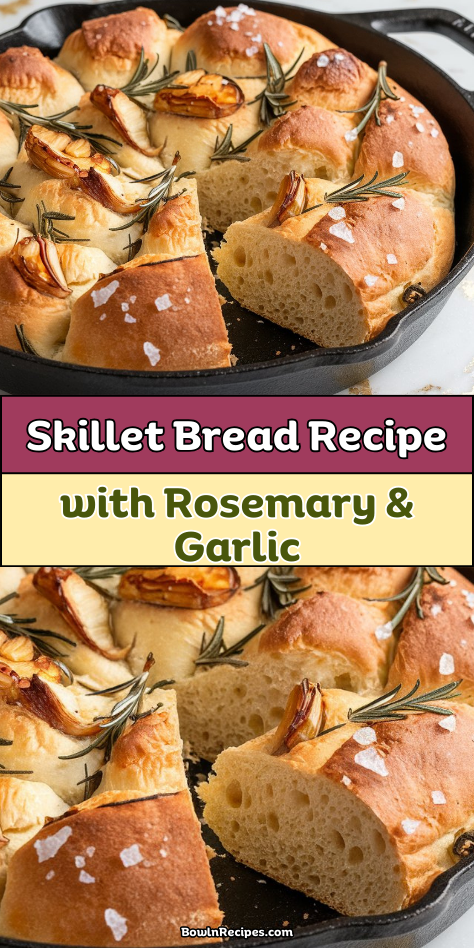
Why You’ll Love this Skillet Bread with Rosemary & Garlic
This rustic skillet bread is about to become your new kitchen obsession. There’s something magical about the combination of fragrant rosemary and garlic baked into a crusty, warm loaf. I’m talking about bread that’s crispy on the outside, tender on the inside, with pockets of flavor in every bite.
The best part? It’s ridiculously simple to make. No fancy equipment needed—just a cast iron skillet and basic ingredients. The dough practically does the work for you while it rises. Plus, your kitchen will smell absolutely heavenly, like an Italian bakery. Who doesn’t want that?
What Ingredients are in Skillet Bread with Rosemary & Garlic?
This simple yet flavor-packed skillet bread requires just a handful of pantry staples plus a few aromatic additions to create something truly special.
- 2¼ teaspoons active dry yeast
- 2 cups lukewarm water (around 105°F)
- 4⅓ cups all-purpose flour, divided
- ½ tablespoon kosher salt
- 2 tablespoons fresh rosemary, finely chopped
- 2 cloves garlic, minced or thinly sliced
- 3 tablespoons olive oil (divided)
- Sea salt for topping
The quality of your herbs makes a big difference here, so try to use fresh rosemary rather than dried for that intense, aromatic flavor that really elevates this rustic bread from good to absolutely crave-worthy.
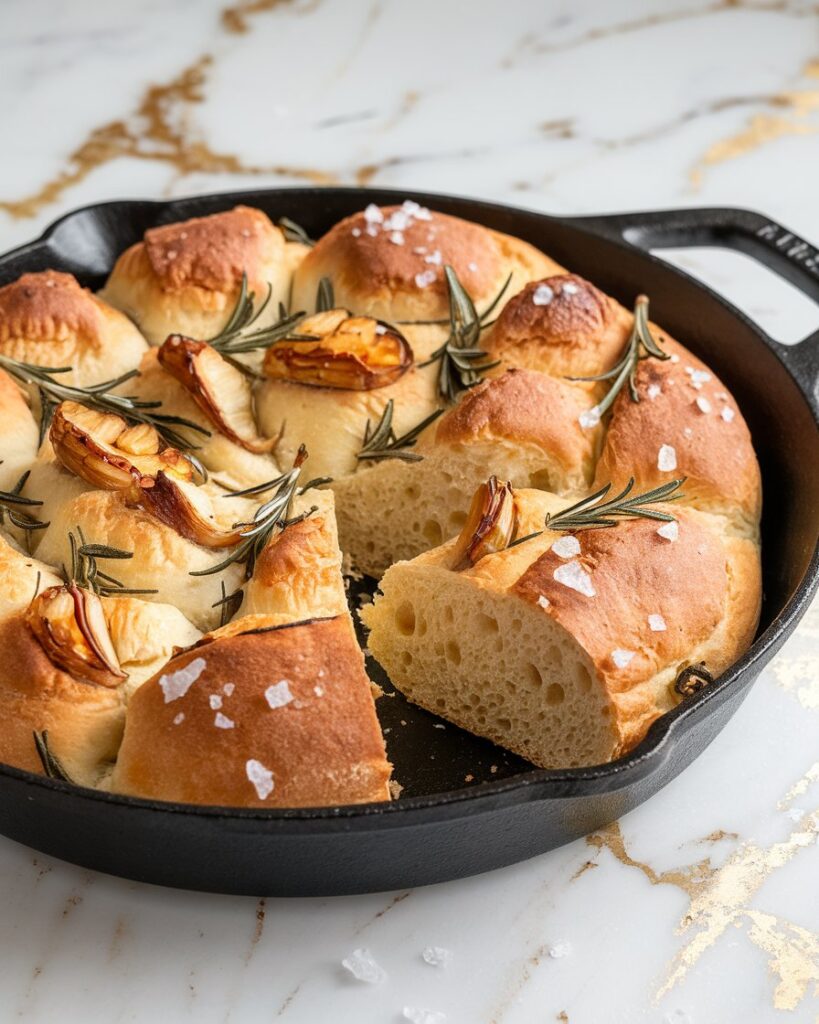
How to Make this Skillet Bread with Rosemary & Garlic
Step 1: Mix the Yeast and Flour Base
Combine 2¼ teaspoons of active dry yeast with 2 cups of lukewarm water (around 105°F) in a large mixing bowl. Add 1 cup of all-purpose flour and ½ tablespoon of kosher salt, then stir until well combined and slightly shaggy. When preparing your bread, a professional stand mixer can make the mixing process even more efficient and consistent.
Step 2: Add the Aromatics
Stir in 2 tablespoons of finely chopped fresh rosemary and 2 minced garlic cloves to the mixture. The fragrance that rises from the bowl at this point is absolutely heavenly, like a little preview of the incredible bread to come.
Step 3: Complete the Dough
Gradually add the remaining 3⅓ cups of all-purpose flour to the mixture, stirring well after each addition. You’re looking for a cohesive, slightly sticky dough that pulls away from the sides of the bowl but still feels alive under your fingers.
Step 4: First Rise
Cover the bowl with a clean kitchen towel or plastic wrap and let it rise in a warm spot for about 1 hour. The dough should double in size, growing puffy and full of beautiful air pockets that will create that rustic texture we’re after.
Step 5: Prepare the Skillet
Coat a cast iron skillet with 1 tablespoon of olive oil, making sure to cover both the bottom and sides. Transfer your risen dough to the skillet and gently shape it to fit, being careful not to deflate all those wonderful air bubbles.
Step 6: Second Rise and Topping
Brush the top of the dough with another tablespoon of olive oil and sprinkle with any remaining garlic, rosemary, and a generous pinch of flaky sea salt. Let the dough rise for another 20 minutes while you preheat your oven to 400°F.
Step 7: Bake to Golden Perfection
Bake the bread for 20-25 minutes until the crust turns a beautiful golden brown. The kitchen will fill with an aroma that might actually make you weak in the knees—I’m not even exaggerating.
Step 8: Cool Properly
Remove the bread from the skillet immediately after baking and transfer to a cooling rack. This vital step prevents the bottom from getting soggy and guarantees that perfect crispy crust all around. Let it cool slightly before slicing, if you can resist that long.
What to Serve with Skillet Bread with Rosemary & Garlic
This rustic bread is practically begging to be dunked into a hearty Italian soup or stew—think minestrone or a Tuscan white bean soup that’ll soak right into those airy pockets. For dinner, serve it alongside pasta with a simple olive oil and parmesan coating, or tear off chunks to scoop up a garlicky tomato sauce.
During lunch, it makes the perfect companion to a fresh green salad drizzled with balsamic vinaigrette. And don’t overlook the simplest option: a good quality olive oil mixed with fresh herbs for dipping.
For breakfast? Toast a slice and top with smashed avocado and a sprinkle of red pepper flakes. The garlic and rosemary flavors truly make this bread versatile enough for any meal of the day.
Skillet Bread with Rosemary & Garlic Substitutions and Variations
- Flavor boosters: Add 1/3 cup grated parmesan, 1/4 cup olives, or 2 tablespoons sun-dried tomatoes for Mediterranean flair.
- Seasonal twists: Fold in caramelized onions in fall, fresh basil in summer, or everything bagel seasoning anytime.
- No skillet? A regular cake pan works—you’ll just miss some of that crispy edge magic.
Leftovers and Storage for this Skillet Bread with Rosemary & Garlic
This rustic bread is best enjoyed fresh from the oven when that crust is perfectly crisp, but leftovers still shine with proper handling:
- Room temperature storage: Keep for up to 2 days in an airtight container or wrapped in a clean kitchen towel (my preference for preserving that lovely crust).
- Freezer friendly: Slice before freezing in a ziplock bag for up to 1 month. Thaw individual slices as needed.
- Reviving day-old bread: Spritz with water and warm in a 350°F oven for 5-7 minutes. This works magic to restore that fresh-baked texture.
- Preventing staleness: Never refrigerate this bread—it accelerates drying out. For slightly older bread, consider transforming it into garlic bread, croutons, or bread pudding.
Final Thoughts
There’s something deeply satisfying about pulling a golden loaf of rosemary garlic bread from a hot skillet. This rustic bread brings together the earthy aroma of rosemary and the warm punch of garlic in a crusty exterior that gives way to a tender, aromatic interior.
It’s perfect for those weekend afternoons when you want your home filled with the scent of baking bread, or as an impressive yet simple offering for dinner gatherings.
The minimal hands-on time makes it accessible even on busy days, while the results feel like something from a countryside bakery. As the seasons change, this skillet bread remains a constant comfort—a reminder that some of the best things in life still come from flour, water, and a little patience.
Frequently Asked Questions
Can I Prepare the Dough Ahead of Time and Refrigerate Overnight?
Yes, I’d recommend refrigerating the dough after the first rise. Just punch it down, cover tightly, and refrigerate overnight. Let it come to room temperature before shaping in the skillet and proceeding with baking.
Why Does My Bread Always Stick to the Skillet Despite Oiling?
If your bread sticks despite oiling, I’d recommend using more oil or trying parchment paper. Your skillet might need better seasoning, or you’re not letting the bread develop a proper crust before removing it.
Can I Use a Regular Pan if I Don’t Have Cast Iron?
Yes, you can use a regular oven-safe pan instead of cast iron. I’d recommend a heavier pan if possible, and make sure to still oil it well to prevent sticking. Results may vary slightly.
Will Bread Machine Yeast Work Instead of Active Dry Yeast?
Yes, I’d happily use bread machine yeast instead of active dry yeast. They’re interchangeable in this recipe. You might even be able to skip the initial proofing step since bread machine yeast activates more quickly.
Is Preheating the Skillet Necessary Before Adding the Dough?
No, I don’t preheat the skillet for this recipe. Simply coat the cold skillet with olive oil before adding your dough. The bread will rise nicely during the second rise period regardless.